1
Feed and pretreatment scope
Confirm the feed starting point
Whole seed, kernels, screened feed, moisture, and impurities change pretreatment and press rhythm.
See feed prepCottonseed equipment is decided by raw-seed preparation and crude-oil handling: remove lint, manage hulls, condition kernels, press hot, then route dark crude oil into a refining-ready tank system.
A cottonseed line becomes clear when the plant knows what enters the workshop, how the seed is heated and packed into the press, where crude oil settles, how cake leaves the room, and whether refining happens on site.
Fast inquiry
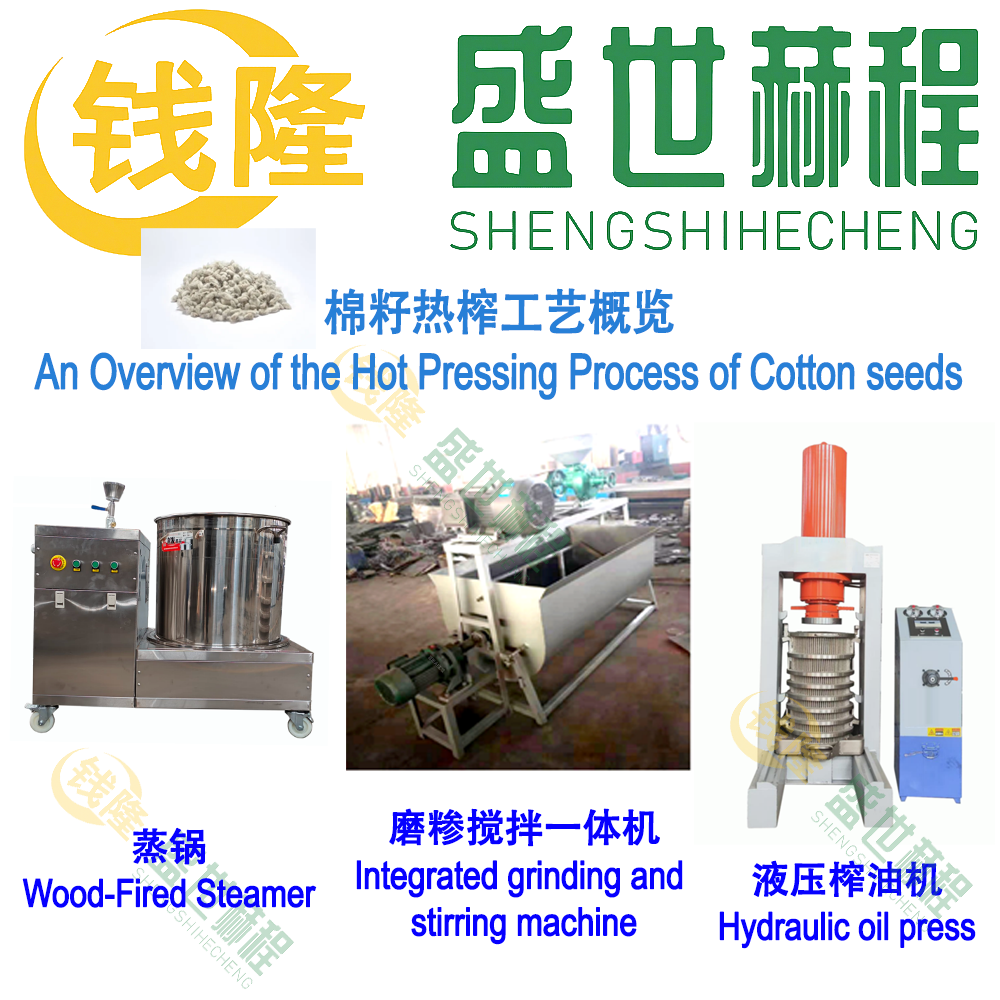
Prepared cottonseed is heated first, then ground and stirred until the feed can be packed into the hydraulic press barrel. Crude oil flows to a settling tank, while hot cake needs a clear discharge and cooling area.
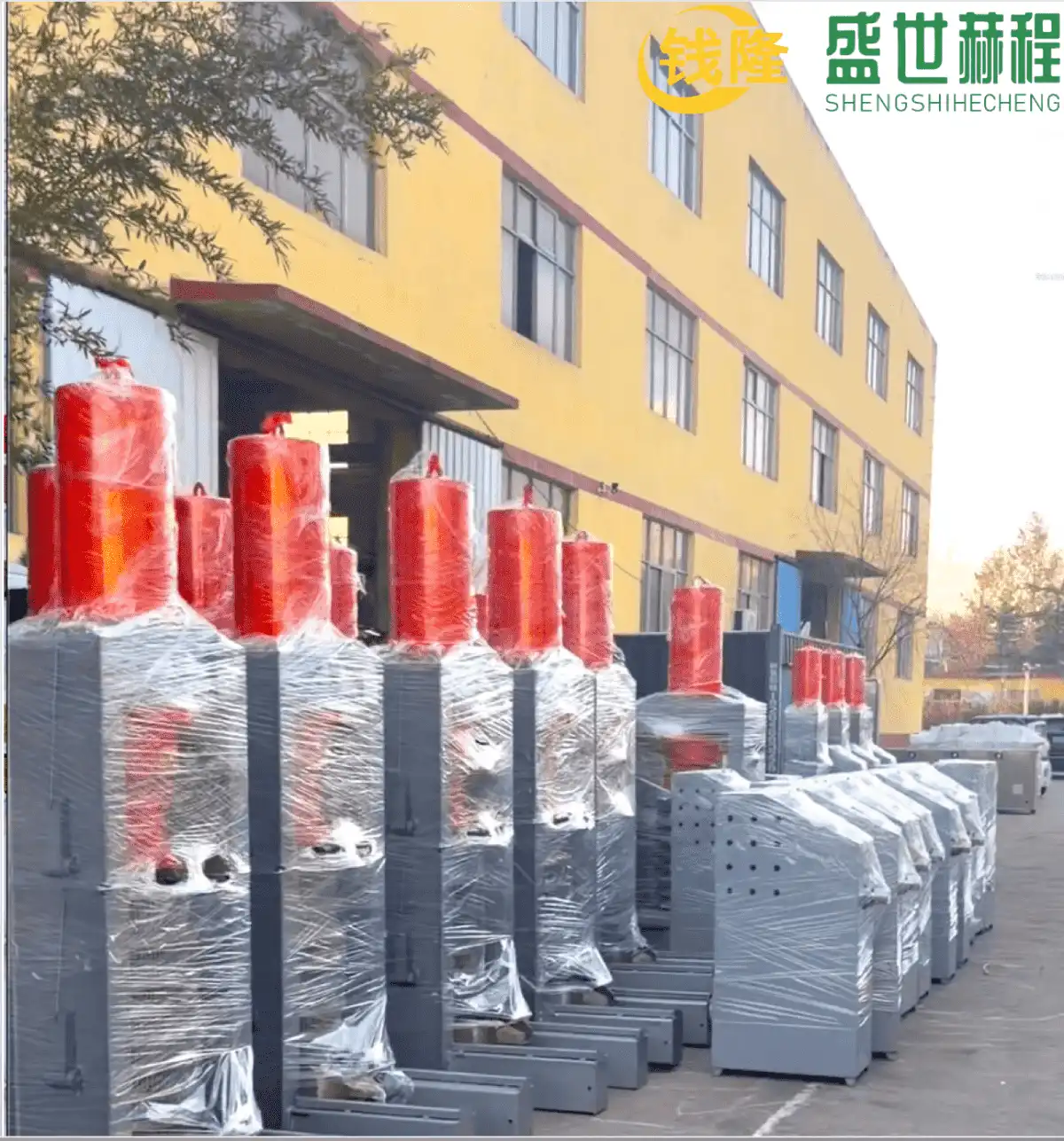
Cottonseed arrives as an industrial raw material, not as a clean kernel. Residual lint, hull content, foreign matter, moisture, and gossypol all decide whether the press room can run steadily and whether the crude oil can move safely into refining.
Use this local factory clip as the press-cell reference until a dedicated cottonseed video is added. The cottonseed page keeps the focus on hot conditioned feed, cake discharge, and crude-oil collection.
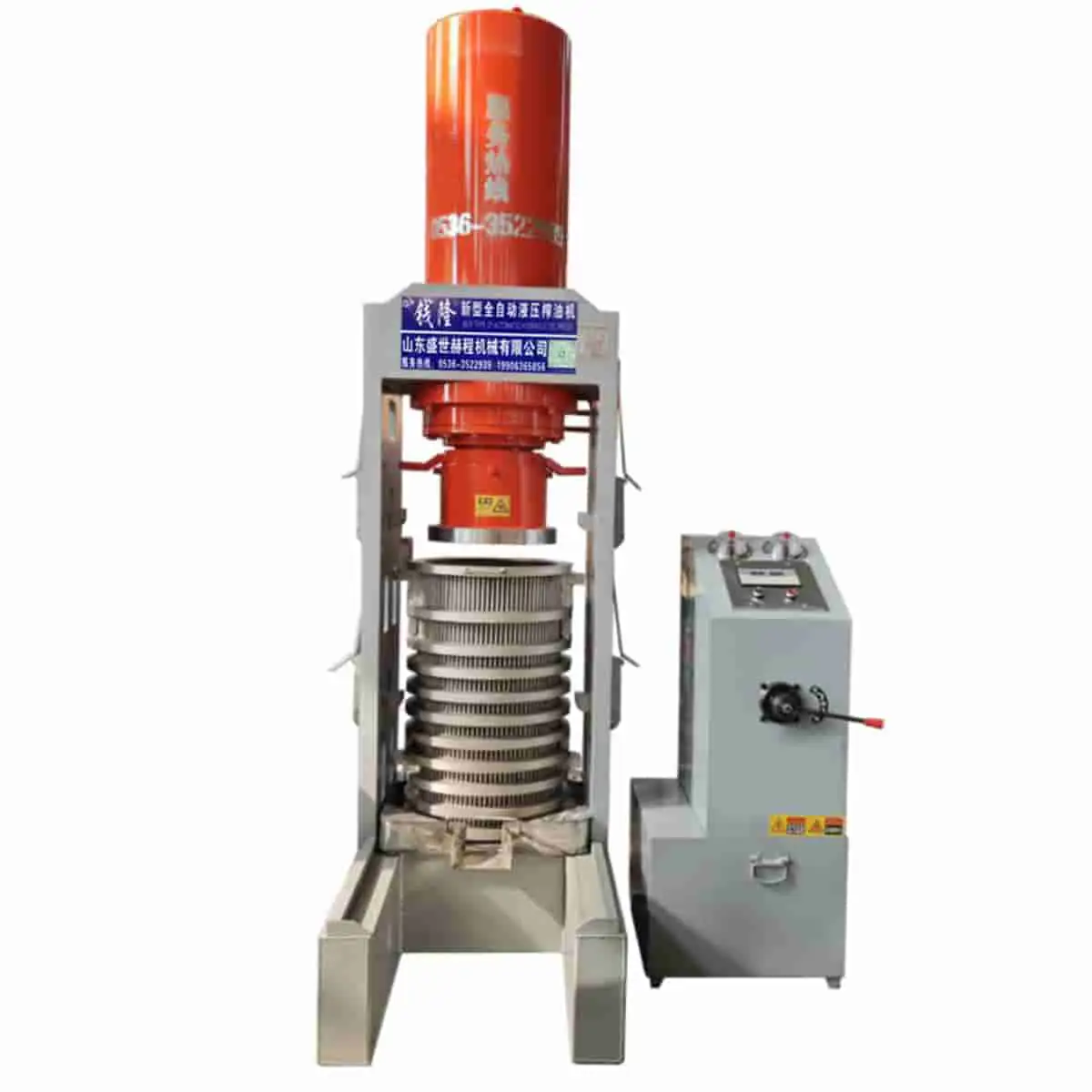
More hull in the press feed means darker crude oil, heavier refining load, and lower meal value. Cleaner kernels usually press more predictably, but the extra separation equipment must be justified by local seed quality and by-product value.
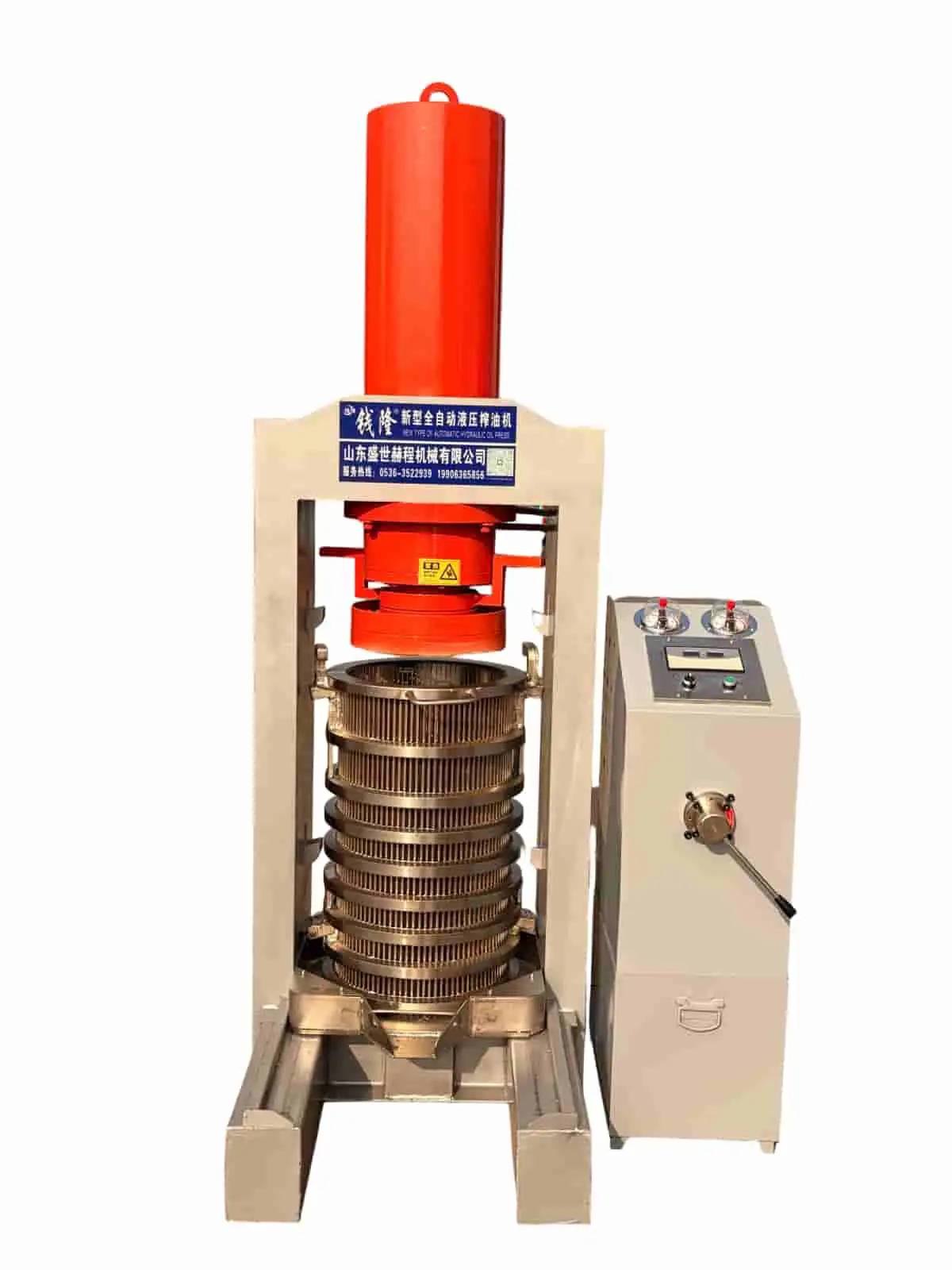
Pressed cottonseed oil should be handled as crude oil. It needs settling or filtration before transfer, then alkali neutralization, bleaching, and deodorizing before edible use. Tank volume and pipe route are therefore part of the press-line layout.
From raw material to finished oil — design, manufacturing, installation, and technical support for small to large-scale oil plants. Qingzhou, Weifang, Shandong Province, China.
Seven hydraulic models from 300–630 ton — hot (300/325) and cold (355–500 class) with 100 kg max feed per batch (see spec tables).
Pressing, refining, dewaxing, filtration, filling, and supporting equipment — ODM supported for complete oil projects. Since 2008: 200+ staff, 1000+ customers served.
Project path
Real projects do not need a long directory first. Start with feed, route, and post-press handoff; after that, the factory can discuss scope directly.
Feed and pretreatment scope
Whole seed, kernels, screened feed, moisture, and impurities change pretreatment and press rhythm.
See feed prepPressing modules
Route decides roasting, temperature, filtration, oil finish, and packaging before model comparison.
See route optionsPost-press handoff
Output target, workshop, voltage, downstream handoff, and photos make sizing much faster.
Check cottonseed line scopePhotos and videos first
If the full brief is not ready yet, these clips show barrels, pressing, cake discharge, workshop layout, larger models, and export delivery so the scope becomes easier to place.
Seeing the barrel, frame, and loading space makes capacity, shifts, and model selection easier to discuss.
Useful for checking footprint, access aisles, loading side, cake discharge, and filtration position.
Bagging, bins, or crushing after discharge changes press-room flow and by-product value.
When the project moves beyond trial batches, workshop height, lifting, loading, and filtration need to be checked together.
For export projects, voltage, crate packing, spare parts, installation mode, and destination port should be aligned early.
Fast startup after arrival depends on power, foundation, lifting, and staffing being confirmed before shipment.
Prepared cottonseed is heated first, then ground and stirred until the feed can be packed into the hydraulic press barrel. Crude oil flows to a settling tank, while hot cake needs a clear discharge and cooling area.
Cottonseed arrives as an industrial raw material, not as a clean kernel. Residual lint, hull content, foreign matter, moisture, and gossypol all decide whether the press room can run steadily and whether the crude oil can move safely into refining.
Use this local factory clip as the press-cell reference until a dedicated cottonseed video is added. The cottonseed page keeps the focus on hot conditioned feed, cake discharge, and crude-oil collection.
More hull in the press feed means darker crude oil, heavier refining load, and lower meal value. Cleaner kernels usually press more predictably, but the extra separation equipment must be justified by local seed quality and by-product value.
Pressed cottonseed oil should be handled as crude oil. It needs settling or filtration before transfer, then alkali neutralization, bleaching, and deodorizing before edible use. Tank volume and pipe route are therefore part of the press-line layout.
Plant size
A 10-30 t/d gin-side line, a 50-100 t/d regional mill, a retail edible-oil line, and an export project do not use the same back end. The difference is not only press count. It is seed storage, delinting depth, crude-oil tank volume, refining capacity, filling, and by-product handling.
Best when seed comes directly from a nearby gin during the season. The key is simple intake, delinting or cleaned-seed confirmation, hot pressing, crude-oil tanks, and a defined outlet for crude oil and cake.
At this scale, mixed seed quality, larger storage, hull handling, press staging, crude-oil buffering, and refining capacity need to be sized together. A press-only list is usually not enough.
Retail oil requires edible refining, stable color, odor control, filtration polish, storage discipline, and filling standards. The oil route matters more than the press photo.
For export work, the refined-oil target, package size, label and carton plan, voltage, spare parts, and installation support have to match the destination country before shipment.
Process order
A usable cottonseed line is sized from the raw material forward: how much lint remains, whether hulls are separated, how the kernel is conditioned, where the dark crude oil rests, and whether refining is on site or off site. Press tonnage only becomes meaningful after those conditions are clear.
Most cottonseed arrives from a gin. But lint level varies. Acid-delinted seed is cleaner to press. Fuzzy seed needs additional preparation. The delinting status changes cleaning, separation, and press behavior simultaneously.
Hull fraction in the press feed directly affects crude-oil color, gossypol transfer, and meal grade. Better separation means cleaner oil, less gossypol to remove downstream, and higher-protein meal — but costs more in preparation equipment.
Gossypol level changes with cotton variety, hull separation, and cooking temperature. The press line should therefore keep crude oil separate, collect samples cleanly, and send the oil into a defined refining path before edible sale.
Cottonseed crude oil should leave the press bay through a tank and pump route that can later feed neutralization, bleaching, and deodorizing. Otherwise the plant may need to move tanks and pipes after trial production.
Workshop layout
In a cottonseed plant, each section protects the next one. Delinting protects separation, separation protects oil color and meal value, conditioning protects press rhythm, and crude-oil buffering protects the refining section. The layout should show those handoffs clearly.
The useful drawing is not just a machine arrangement. It should show crude-oil tank position, sampling point, pump route, and the reserved connection for neutralization and bleaching.
Use this workshop clip to support the cottonseed layout discussion around press aisles, cake discharge, cleaning access, and crude-oil transfer.
The delinting and cleaning section determines how clean the seed is when it reaches hull separation. Residual lint creates handling problems, and trash affects oil color and press wear.
Hull fraction in the press feed changes everything downstream: crude-oil darkness, gossypol load, filtration difficulty, and refining cost. Separation quality is the highest-leverage preparation decision on cottonseed.
Cottonseed crude oil is dark and gossypol-laden. Buffer tanks, settling residence time, and the handoff to alkali refining, bleaching, and deodorizing must be scoped in the first phase.
Operating model
The same press room behaves differently depending on where the cottonseed comes from. A gin-side line has seasonal, direct seed flow; a regional mill must absorb mixed seed quality; an integrated cotton complex must connect pressing, refining, and feed by-products on the same site.
Seed arrives directly from the gin, still warm, with known lint level. The hydraulic line is sized to match gin throughput. Crude oil is typically sold to a refiner or stored for seasonal pickup.
Seed is purchased from multiple gins and stored on site. Delinting and separation may need to handle wider quality variation. The mill often includes its own refining section to sell finished oil.
Ginning, pressing, refining, and possibly feed production share one site. The hydraulic line is one module in a larger system. Layout must support shared utilities, common logistics, and continuous material flow.
Before equipment sizing
For cottonseed, the missing details are usually not small. If lint status, hull separation, crude-oil destination, refining interface, and meal handling are absent, the equipment list can look complete while the actual plant still has gaps.
Cottonseed model selection is useful only after the feed condition, kernel preparation, hot-press cycle, crude-oil tank route, and refining interface are visible. The press should fit the plant route, not replace it.
Cottonseed lint and hulls (30–40% of seed weight) must be controlled before pressing. The line changes depending on whether seed arrives fuzzy, acid-delinted, cleaned, or already separated into kernels.
Crude cottonseed oil is dark and contains free gossypol at 0.02–0.2%. Alkali refining, bleaching, and deodorization are mandatory before the oil is edible. The press layout must accommodate these steps.
Cottonseed kernels are cooked and conditioned before hot pressing on the 300/325 series (100 kg/barrel, 30–40 min pure press, 1.5 h/2 barrels with loading). Shift output is calculated around this cycle.
Cottonseed meal (after gossypol binding) is a feed ingredient; hulls are sold as roughage or fuel. By-product economics influence whether the line optimizes for oil yield or meal quality.
Process and line path
Each section follows a practical project path so process notes, equipment scope, and project details stay connected.
Align the common questions first
The FAQ clears the sticking points around feed boundary, pretreatment depth, downstream handoff, and project scope before the machine discussion narrows.
Once feed condition, target output, utilities, and post-press destination are clear, this becomes the place to turn scope into a workable engineering discussion.